

One of the best things about staying in Rome is that the city does not reveal itself all at once. It opens gradually. You start with the area around you, then move a little farther, then a little farther again, and before long you realize that every part of Rome has its own rhythm, its own atmosphere, and its own reasons to stop and look around.
That is exactly why our location in Quartiere Appio Latino works so well as a base for exploring the city. You do not begin your stay in a random part of Rome. You begin in an area that already gives you history, local life, green spaces, and easy access to some of the most important places in the city. From here, Rome unfolds naturally.
Start with the area around Quartiere Appio Latino
If you stay in Quartiere Appio Latino, the first thing to understand is that you are already surrounded by places worth seeing. This is not just a residential district where you sleep and leave. It is part of the experience.
The area is closely linked to ancient Rome through the Via Appia and Via Latina, two of the city’s historic roads. That connection is still visible today in the atmosphere of the neighborhood and in the remarkable places nearby. You are close to the Appian Way Regional Park, one of the most fascinating parts of Rome for anyone who wants to see the city beyond the classic postcard version. Here, Rome becomes quieter, greener, and older all at the same time.
Discover the Appian Way and the Caffarella Park
One of the first places we always recommend exploring is the Appian Way area. It is one of the most evocative parts of Rome because it combines open space, archaeological remains, and a strong sense of continuity with the ancient city. Walking here feels completely different from walking in the historic center. The pace slows down. The landscape opens up. The city feels older and deeper.
Very close by, the Caffarella Park adds another side to the experience. This is one of those places that surprises visitors because it feels far from the intensity of central Rome, even though it is still very much part of the city. It is ideal for a morning walk, a slower afternoon, or simply for seeing a greener and more relaxed Rome. If you want to understand why this area is special, this is one of the best places to begin.
A more local and authentic side of Rome
What makes this part of the city so valuable is not only its history. It is also its atmosphere. Around Quartiere Appio Latino, you find cafés, shops, and restaurants that belong to daily Roman life. This matters because a stay in Rome is not only about monuments. It is also about how the city feels between one sight and the next.
That is one of the reasons our bed and breakfast is such a strong starting point. You can move easily toward the major landmarks, but when you return, you are still in a neighborhood that feels lived in, real, and connected to everyday Rome.
Move next toward San Giovanni and Celio
Once you begin exploring beyond the immediate area, San Giovanni is one of the first major zones to head toward. It is close, historically important, and often overlooked by visitors who focus only on the better-known tourist routes. Yet this part of Rome contains one of the city’s great churches, the Basilica of San Giovanni in Laterano, along with its monumental square and surrounding religious and historic buildings.
This is a part of Rome that feels grand without feeling overdone. It gives you a sense of the city’s religious and civic history while still remaining connected to local neighborhoods and normal daily movement.
From here, continuing toward Celio makes perfect sense. Celio has a quieter, more elegant feel and leads naturally toward one of the most iconic areas of Rome. It is the kind of district that connects neighborhoods to monuments in a very Roman way. You do not suddenly “arrive” at history. You move into it.
Then continue to the Colosseum and the ancient heart of Rome
From the Appio Latino and San Giovanni side of the city, reaching the Colosseum area feels natural. This is one of the biggest advantages of staying here. You are not cut off from Rome’s main highlights. You are close enough to reach them easily, but not stuck in the middle of the busiest tourist zone all day.
The Colosseum, the Roman Forum, and the Palatine Hill form one of the most important archaeological areas in the world. Even if you have seen them in photographs for years, the first real view still has impact. The scale, the stone, the sense of history, the way the ruins spread through the city. It all feels larger and more present than expected.
This is where many visitors feel that they have truly arrived in Rome. And because our area sits on the right side of the city for this route, getting there feels straightforward rather than exhausting.
Do not miss the Baths of Caracalla
Before or after the Colosseum area, the Baths of Caracalla deserve a place in your itinerary. They are among the most impressive remains of ancient Rome and offer a different kind of experience from the Forum or the amphitheater. Here, the scale of Roman daily life becomes more visible. These were not simply baths in the modern sense. They were monumental spaces for leisure, movement, and public life.
The atmosphere around them is also more open and less compressed than in the center, which makes the visit feel calmer and more spacious.
Go farther into the historic center
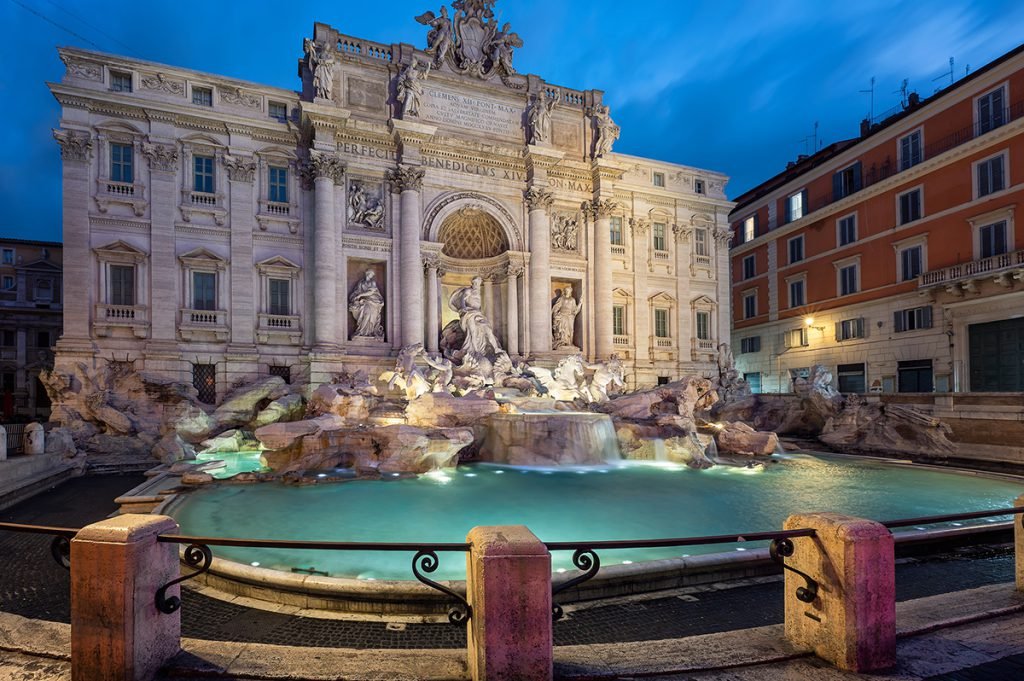
Once you have explored the areas closest to us, the city opens outward into the historic center. This is where many of Rome’s best-known places come together. Piazza Venezia, the Pantheon, Piazza Navona, the Trevi Fountain, and the Spanish Steps all belong to this wider central area.
These are places worth seeing, of course, but they are best enjoyed when approached as part of a larger movement through the city, not as a rushed checklist. Rome rewards wandering. The historic center is where that becomes most obvious. One church leads to another square. One street opens into another fountain. A small turn changes the entire mood of the afternoon.
Because you begin from Quartiere Appio Latino, you have the advantage of being able to enter this part of Rome with energy, then leave it again when you want to slow down.
Then expand to Trastevere, Aventine, and Vatican City
After the ancient center and the classic landmarks, there are still more areas that deserve your time.
Trastevere offers one of the most atmospheric sides of Rome, with its streets, restaurants, evening life, and distinctly Roman character. The Aventine gives you a quieter, more refined side of the city, with beautiful views and a more peaceful rhythm. Vatican City, of course, remains one of the essential visits for art, architecture, and history.
These places are farther from Quartiere Appio Latino than the first areas you will explore, but that is exactly the point. Rome should be discovered in layers. Starting near us lets you build outward in a way that feels natural and never forced.
Why our location makes exploring Rome easier
The real strength of staying in Quartiere Appio Latino is that it lets you experience Rome in the right order. You begin with local life, green space, and ancient roads. You continue toward San Giovanni and the great early landmarks. You move easily into the Colosseum and the heart of ancient Rome. Then you expand toward the historic center, Trastevere, and Vatican City.
That progression makes sense. It feels human. It feels like discovering a city rather than chasing it.
This is why we believe our bed and breakfast is in such a strong position for a stay in Rome. You are not only close to important places. You are in the right place to let the city reveal itself properly.
Are you ready to visit Rome?
If you are wondering where to go in Rome and what to see, the answer is not just a list of famous names. It is a route, a rhythm, and a way of moving through the city.
Start near Quartiere Appio Latino. Explore the Appian Way, the Caffarella Park, and the local surroundings. Continue to San Giovanni, Celio, the Colosseum, and the Baths of Caracalla. Then let the city open further into the historic center, Trastevere, and Vatican City.
That is one of the best ways to experience Rome.
And it is one of the reasons staying here makes so much sense.